








































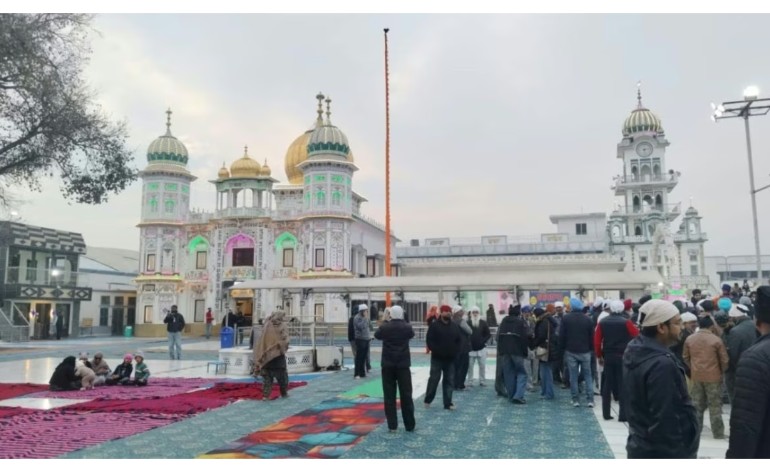
Jalandhar: The Rasokhana Nabh Kanwal Raja Sahib Gurdwara, located in Mazara Nau Abad village of Punjab’s Doaba region, has recently drawn widespread attention amid a controversy linked to missing saroops (copies) of the Sri Guru Granth Sahib. Beyond the current debate, the shrine has a long spiritual history that continues to attract devotees across religious and social divides.
Who was Raja Sahib?
Raja Sahib, whose original name was Bhagwan Dass, was born in 1862 in Ballowal village of Nawanshahr, at his maternal grandparents’ home. He was the grandson of Baba Naudha Singh, a nambardar from Mannan Hanan village in Hoshiarpur district. Despite belonging to a family of village headmen, Raja Sahib chose not to adopt the traditional nambardari role and instead devoted his life to spiritual pursuits.
According to followers, his parents, Mangal Dass and Sahib Devi, remained childless for several years and served saints in the hope of being blessed with a child. It is believed that Mangal Dass received a divine message during meditation predicting the birth of a son who would ease people’s suffering—an account central to Raja Sahib’s spiritual narrative.
Over time, Bhagwan Dass came to be known as Nabh Kanwal (meaning “lotus of the sky”) Raja Sahib. The lotus symbol remains a recurring motif across the shrine complex. A detailed account of his life and teachings is recorded in the Noori Kirnan script, followed by his devotees.
Why Mazara Sahib is significant
While several religious sites associated with Raja Sahib exist across Punjab, Mazara Nau Abad village in Shaheed Bhagat Singh Nagar holds special importance as it is the place where he was buried on August 30, 1940. The site where his cremation took place later developed into a large religious complex, now known as Rasokhana.
Senior functionaries of the shrine say Raja Sahib never allowed himself to be photographed, and no authentic image of him exists. The name “Rasokhana” loosely translates to a place of essence or sweetness, symbolising spiritual fulfilment and blessings associated with Raja Sahib.
A shrine beyond religious boundaries
The Rasokhana shrine is regarded as a syncretic place of worship, drawing followers from different religions and castes. Devotees believe that prayers offered here are fulfilled, leading to a steady flow of visitors from across Punjab and beyond.
One popular belief associated with the shrine is that offering miniature aeroplanes helps devotees realise their dream of going abroad. As a result, a significant number of overseas Punjabis visit the shrine, offering fruits, cash, gold and silver as part of their prayers.
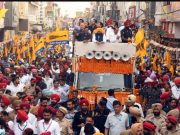
During major religious gatherings, thousands of pilgrims visit the complex, which often echoes with chants such as “Raja Balli, Kar Bhali” and “Jai Raja Sahib Di”. Continuous akhand path (unbroken recitation) of the Sri Guru Granth Sahib is also conducted, with bookings typically made months in advance.
Present-day relevance
In recent weeks, the shrine has come under intense public and political focus following statements by Punjab Chief Minister Bhagwant Mann regarding missing saroops of the Sri Guru Granth Sahib. Visits by leaders from multiple political parties have further highlighted the shrine’s contemporary relevance.
As debates continue, Rasokhana Nabh Kanwal Raja Sahib Gurdwara remains a site where history, faith and present-day politics intersect in Punjab’s religious landscape.