




































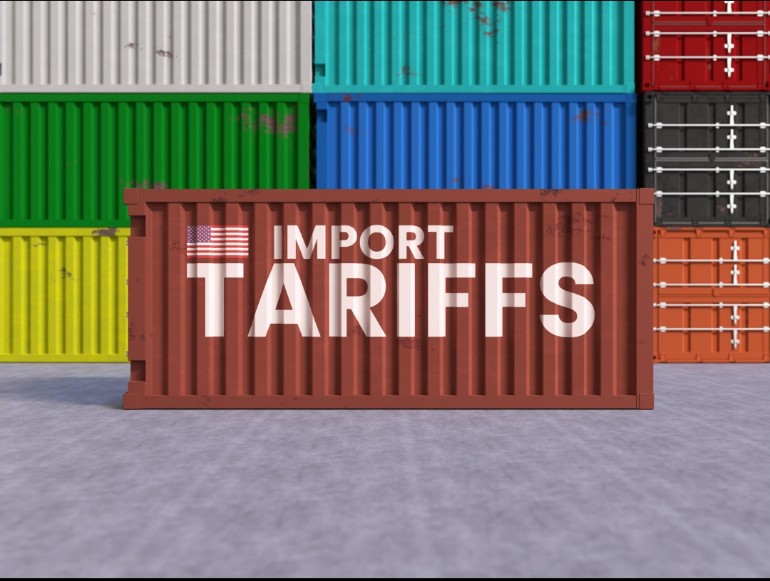
Washington: The United States has launched a new round of trade investigations under Section 301 of the Trade Act of 1974, targeting policies and industrial activities in 16 economies, including India and China.
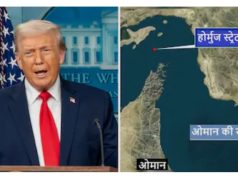
The probe was announced on March 11 by the Office of the United States Trade Representative. It follows a ruling by the Supreme Court of the United States that struck down sweeping tariffs imposed by the administration of Donald Trump.
After the court ruling, Trump announced a temporary 10% tariff on imports from all countries for 150 days starting February 24, replacing the previously invalidated tariffs.
What the investigation covers
The investigation focuses on several strategic sectors, including:
Steel and aluminium
Automobiles
Batteries
Electronics
Chemicals
Machinery
Semiconductors
Solar modules
According to the USTR, the probe aims to identify unfair foreign policies or industrial practices that may harm US manufacturing.
Economies under investigation
The review targets 15 countries and the 27-member European Union bloc, including:
China, Singapore, Switzerland, Norway, Indonesia, Malaysia, Cambodia, Thailand, South Korea, Vietnam, Taiwan, Bangladesh, Mexico, Japan and India, along with the European Union.
Why the investigation was launched
Following the US Supreme Court ruling against earlier tariffs, Trump signed a proclamation on February 20 imposing a temporary 10% import duty on all countries under Section 122 of the Trade Act of 1974. The duty could be increased to 15% if necessary.
If the new investigation confirms unfair trade practices, Washington could impose additional tariffs or other trade restrictions.
Written submissions in the case will begin March 17, while public hearings will take place in Washington from May 5 to May 8.
Possible impact on India
According to the Global Trade Research Initiative, the US probe has highlighted sectors in India where there may be excess production capacity, including:
Solar modules
Petrochemicals
Steel
Textiles
Automotive products
India’s solar module manufacturing capacity is estimated to be three times higher than domestic demand, suggesting potential export surpluses.
However, the Federation of Indian Export Organisations said India’s export growth is largely driven by global demand, and there is no immediate cause for concern, though developments will be closely monitored.
US laws used to impose tariffs
The United States has relied on several trade laws to impose or consider tariffs:
International Emergency Economic Powers Act (IEEPA), 1977 – used by the Trump administration in February 2025, but later struck down by the court.
Section 122 of the Trade Act, 1974 – used in February 2026 to impose a temporary 10% tariff for 150 days.
Section 232 of the Trade Expansion Act, 1962 – allows tariffs on sectors such as steel and aluminium on national security grounds.
Section 301 of the Trade Act, 1974 – used to investigate and respond to unfair foreign trade practices.