Category: Punjab

  • Drug abuse claims lives of five brothers from one family in Kapurthala, says Family

    Drug abuse claims lives of five brothers from one family in Kapurthala, says Family

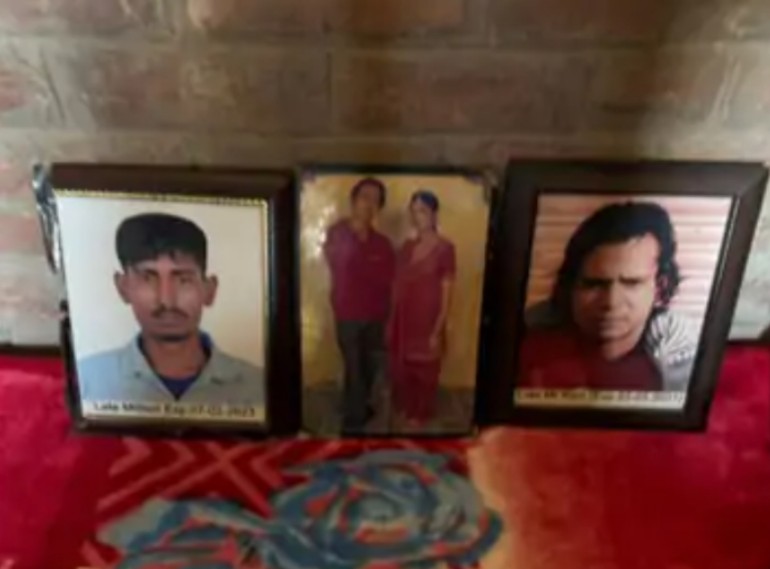
    Kapurthala: In a tragic incident highlighting Punjab’s ongoing drug crisis, five brothers from the same family in Sultanpur Lodhi, Kapurthala, have lost their lives due to substance abuse over the years. The fifth and last surviving son died on Monday during treatment at Guru Nanak Dev Hospital in Amritsar, family members told local media.

    According to information, the youth had initially been admitted to the Civil Hospital in Kapurthala after experiencing breathing difficulties. As his condition worsened, he was referred to Amritsar on Monday. Punjab Chief Minister Bhagwant Mann had also announced that the government would bear the full cost of his treatment, but he could not be saved.

    The deaths in the family span several years. The eldest son, Jaswinder Singh, died about eight years ago while in judicial custody. The second son, Balwinder, died seven years ago. The third son, Ravi, died in 2021 and had a case registered under the NDPS Act. The fourth son, Mithun, died in 2023 and was also facing charges under the NDPS Act. The fifth son, Sonu, who also had a case under the NDPS Act, has now succumbed.

    The incident has raised serious concerns over the growing drug menace in the region.

  • Punjab Excise Revenue Surpasses Targets, Reaches Rs 11,782 Crore; Collections Nearly Double in 4 Years: Harpal Singh Cheema

    Punjab Excise Revenue Surpasses Targets, Reaches Rs 11,782 Crore; Collections Nearly Double in 4 Years: Harpal Singh Cheema

    FY 2025-26 Collection Exceeds Revised Target by Rs 582 Crore: Harpal Singh Cheema

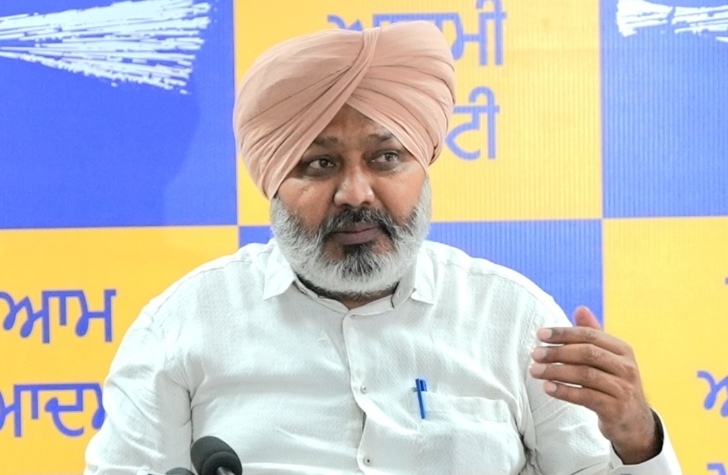
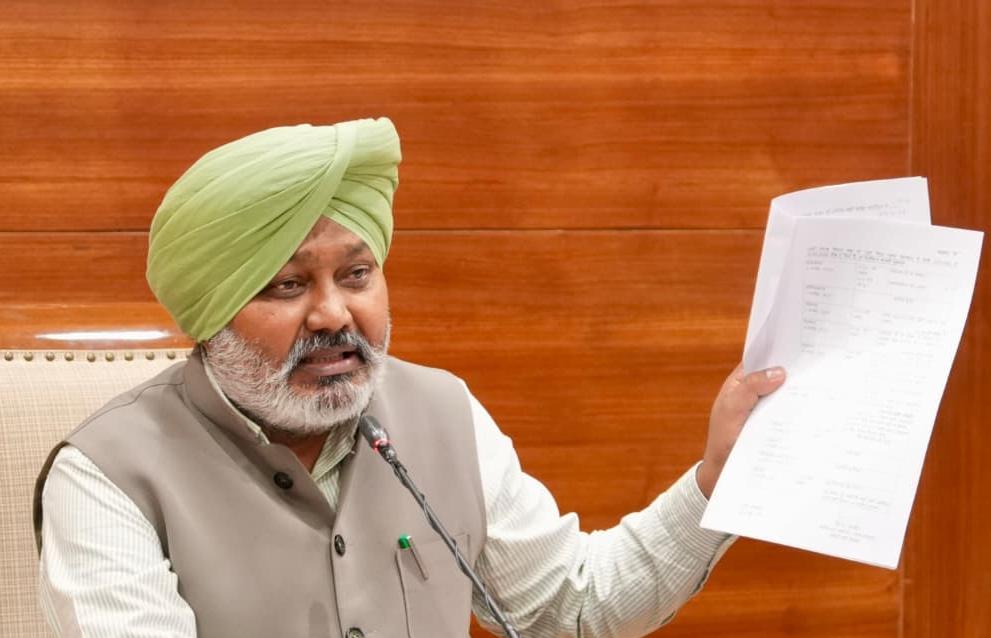
    Chandigarh News (April 7th, 2026): Punjab Finance, Planning, Excise and Taxation Minister Advocate Harpal Singh Cheema on Tuesday announced that the Excise and Taxation Department has achieved a significant milestone in revenue collection for the financial year 2025-26, reflecting the success of robust excise policy measures and efficient administrative practices. He said that against the revised excise revenue target of Rs 11,200 crore, the department has successfully collected Rs 11,782 crore up to March 31, 2026, surpassing the target by Rs 582 crore.

    Sharing the comprehensive financial achievements, Finance Minister Harpal Singh Cheema attributed this success directly to the state government’s proactive governance and trade-friendly policies. Highlighting the historic transformation, Finance Minister Cheema said, “Significantly, excise revenue has nearly doubled over the past four years, rising from Rs 6,254.84 crore to Rs 11,782 crore, with a new target of Rs 12,800 crore set for 2026-27. This accomplishment underscores the department’s strong commitment to maximising revenue while ensuring transparency and compliance.”

    Detailing the blueprint for the upcoming fiscal year, Finance Minister Cheema outlined the strategic financial targets. Cheema said, “For the financial year 2026-27, the Excise Policy has been formulated with a projected license fee target of Rs 10,520 crore, as compared to Rs 9,877 crore in 2025-26. It is pertinent to mention that all 207 retail liquor groups in the state have been allotted for the year 2026-27, reflecting licensees’ confidence in the State Government’s Excise Policy. The overall response to the Excise policy 2026-27 has been encouraging. It has ensured stability in the liquor trade while maintaining a steady flow of revenue to the state exchequer.”

    Addressing the state’s revenue streams’ continuous upward trajectory, Finance Minister Harpal Singh Cheema emphasised the Chief Minister Bhagwant Singh Mann-led Punjab Government’s future strategies. “Looking ahead, the Excise Department has set an ambitious overall revenue target of Rs 12,800 crore for the financial year 2026-27. The Government is confident of achieving this goal through strengthened enforcement, enhanced compliance mechanisms and strategic policy interventions, striking a balance between revenue generation and regulatory efficiency”, he concluded.

  • Shaheed Udham Singh State Institute of Medical Sciences to be built in Hoshiarpur, to be completed in 2 years: CM Bhagwant Singh Mann

    Shaheed Udham Singh State Institute of Medical Sciences to be built in Hoshiarpur, to be completed in 2 years: CM Bhagwant Singh Mann

    CM Bhagwant Singh Mann gifts world-class healthcare facilities worth ₹268 crore to Hoshiarpur

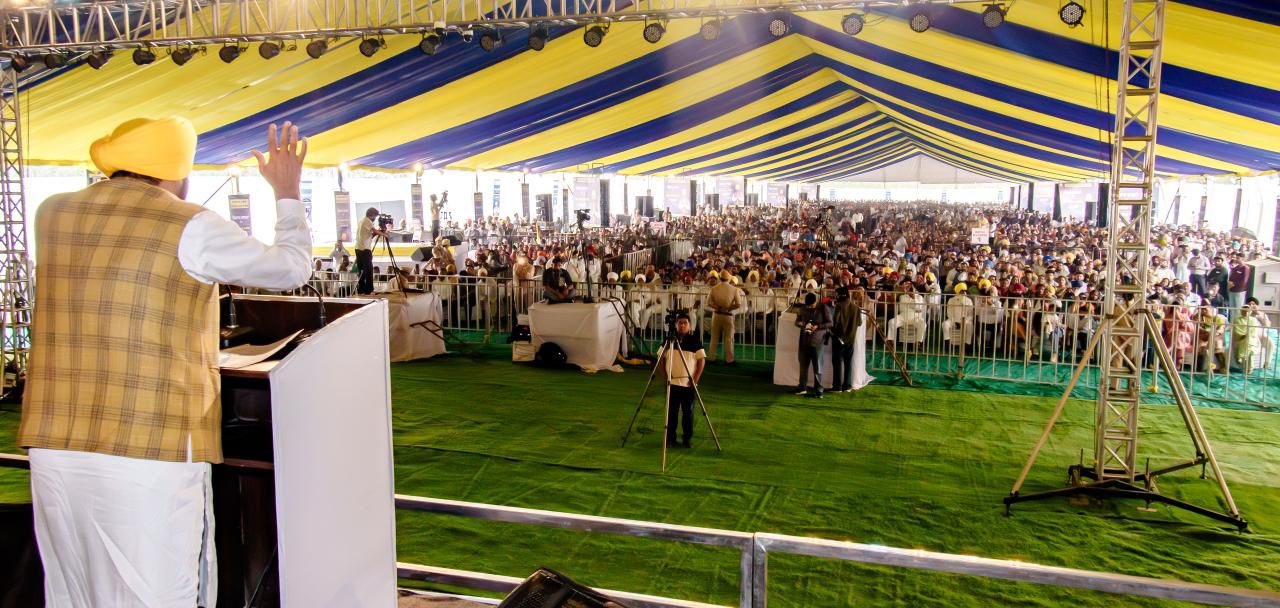
    Hoshiarpur News (7 April 2026): Punjab Chief Minister Bhagwant Singh Mann on Tuesday rolled out a major healthcare and infrastructure push in Hoshiarpur, laying the foundation for a ₹268 crore medical college and 300-bed hospital while announcing the establishment of the Shaheed Udham Singh State Institute of Medical Sciences to be completed within two years. In a gathering in Sham Chaurasi, CM Bhagwant Singh Mann asserted that the Aam Aadmi Party (AAP) Punjab Government is firmly committed to delivering world-class healthcare at people’s doorsteps, detailing a comprehensive ecosystem that will train 100 MBBS doctors annually and provide advanced facilities including MRI, CT scan, specialised surgeries and modern treatment.

    Strengthening last-mile healthcare delivery, he also laid the foundation stone of a ₹9.18 crore Community Health Centre to benefit over 40 villages, alongside seven additional Health and Wellness Centres in the constituency. Expanding the development push, CM Bhagwant Singh Mann further initiated the ₹99 crore Balachaur–Garhshankar–Hoshiarpur–Dasuya road project, a 105 km corridor set to enhance connectivity between Chandigarh, Pathankot and Jammu & Kashmir, reduce travel time between Jammu and Delhi, and facilitate smoother access for devotees travelling to Anandpur Sahib, Mata Naina Devi and Mata Jwala Ji.

    Addressing the gathering after laying the foundation stone of several key projects in the Sham Chaurasi assembly segment, CM Bhagwant Singh Mann said, “For more than 70 long years in the post-independence era the traditional opposition parties have mercilessly looted the state. Due to regressive and divisive policies of these parties the state has lagged behind in the pace of development due to which the people had suffered. However, in the last four years holistic development of the state has been ensured and for the first time the state government has fulfilled all the promises made with people in such a short span.”

    The Chief Minister stated, “It is a matter of immense pride and satisfaction that development of the state has been put on the right track and now the Punjab Government is enhancing its pace with every passing day. The state government has filled the gap of 70 years and now concerted efforts are being made to carve out a Rangla Punjab. The AAP government is the first one in the country to implement the People’s Manifesto as all the genuine demands raised by the people are being translated into works.”
    Highlighting major development initiatives, he added, “Today development works worth ₹385 crore have been launched at Sham Chaurasi, which will give impetus to the progress and prosperity of the region.” He added, “A Medical College and 300 bedded Hospital will come at Hoshiarpur at a cost of ₹268 crore, which will be a big bonanza for the general public. It will go a long way in imparting quality health services to the people besides emerging the state as a hub of medical education.”

    Targeting opposition parties, CM Bhagwant Singh Mann asserted, “Opposition parties are hatching conspiracies to defame me as they are envious of the works being done by the state government for the well being of the masses. These leaders are hand in glove with each other and play the game of musical chairs to secure the interests of each other while in power. However, the AAP government has upset their applecart by ousting them from power thereby fulfilling the aspirations of the common people.”

    CM Bhagwant Singh Mann pointed out, “Captain Amarinder Singh and Parkash Singh Badal never resided in the official residences meant for the Chief Ministers in Chandigarh during their tenure. Rather, these leaders lived in their own palatial houses that have been constructed in Chandigarh as they didn’t feel comfortable in the government houses. Akalis got five opportunities to govern the state but instead of serving the people they mercilessly plundered the people and state.”

    He further said, “Not only this the Akalis betrayed the people by using religion too for securing their vested interests. The Jathedars for the supreme Takhts were chosen from the envelopes given by the Akali leaders. The former Deputy Chief Minister claims that massive development of the state took place during their regime but turns blind eye towards Kotakpura, Behbal Kalan and others where sacrilege of Sri Guru Granth Sahib took place and innocents were killed.”

    Taking a jibe at the Akali Dal’s ‘Punjab Bachao Yatra’, CM Bhagwant Singh Mann added, “The real name of this gimmick of Akali Dal is Parivar Bachao Yatra. After looting the state for 15 years, from whom are they trying to save the state? Akalis have plundered the state mercilessly besides bruising the psyche of Punjabis emotionally and patronizing several mafias in the state. The Akali leadership can never be forgiven as it was responsible for the genocide of several generations of the state as drug trade was patronized by them and bloomed during their long era of misrule.”

    Coming down heavily on the Akali leadership, CM Bhagwant Singh Mann asserted, “These are opportunist leaders who change their colors and their stance, like a chameleon, as per their convenience and vested political interests. Everyone knows that this clan was a stooge of Britishers and was conferred the title of Sir by them for hobnobbing against the patriots who fought for the country. The family had felicitated General Dyer, the perpetrator of Jallianwala Bagh massacre on April 13, 1919, by hosting a dinner for him after this heinous incident.”

    He added, “This act had exposed their anti-national and anti-Punjab mindset and character. This clan had betrayed millions of freedom fighters, who were up in arms against the Britishers. Not only this the family also ensured that General Dyer was also bestowed siropa and forgiveness at Golden Temple. It is even more shocking that Jathedar Arood Singh, the one who had granted the siropa, was the maternal grandfather of former Lok Sabha MP Simarjit Singh Mann.”

    CM Bhagwant Singh Mann said, “History cannot be wiped out and the dubious characters of Badal’s ancestors are etched on the pages of history. The hands of this family are drenched with the blood of the patriots and the role of these traitors in backstabbing the nationalists can never be forgotten. I have ample proof regarding how these people looted the state and its people.”

    Taking on opposition leaders further, CM Bhagwant Singh Mann said, “Sukhbir Badal is not aware about the ground realities as throughout his life he has lived in a secured environment with luxuries and opulence. Sukhbir Singh Badal is a convent educated political leader of Punjab who is not aware of the basic topography of the state but wants to attain political power in Punjab. Leaving everything aside, the former Deputy Chief Minister cannot even differentiate the basic crops of the state as he has scant knowledge about the basic issues.”

    He added, “Captain Amarinder Singh and his family has a dubious track record of deceiving Punjab by standing by every force inimical to the state whether they were Mughals, Britishers or now BJP. When the people of the state had elected him as Chief Minister, Captain Amarinder Singh confined himself to the palace only and visited the state only 10 times. Those who proclaimed to be savior of the waters of the state had destroyed water and those who projected themselves as sewadars of bani failed to check desecration.”

    CM Bhagwant Singh Mann said, “Congress and Akali Dal were the termite that ruined the state after independence due to which Punjab lagged behind in the path of progress. Leaders of these parties never speak against each other but they spit venom against me daily because I have exposed them before people. These are traitors who have never been loyal to the state and its people.”

    Targeting Congress, CM Bhagwant Singh Mann said, “In Congress every leader is aspiring to become the head of the state. They have more CMs rather than ordinary workers to work in the polls. Due to this their top leader has snubbed these leaders in full public view during a recently concluded rally. Congress is a divided house that will collapse due to their infighting.”

    He further said, “It is a pity that the top Congress leaders who come to unite these leaders are not even aware how to pronounce their names. It is ironic that from this stage talks are being made on education, health, power, agriculture and other sectors whereas on the stages of other parties claims are being made for grabbing power. These opportunist leaders are baffled as people are not giving them any response and their agenda is confined to the welfare of their families rather than that of people.”

    Emphasising governance priorities, the Chief Minister Mann stated, “No freebie or concession cards can eliminate poverty or other social maladies in the state but education is the key that can pull people out of this vicious circle by raising their standard of living. Education is the light that illuminates the world by dispelling the darkness and the state government is laying special thrust on it. The government is making strenuous efforts to transform government schools due to which students are excelling in every sphere.”

    On agriculture and power, CM Bhagwant Singh Mann said, “For the first time in the history of the state more than eight hours of uninterrupted power has been supplied to farm tube wells during paddy season. Farmers are now receiving electricity during the daytime for irrigation for the first time, which has transformed their lives. The state government is judiciously utilizing every single penny of the state exchequer for the well being of the people.”

    Highlighting welfare measures, CM Bhagwant Singh Mann said, “Mukh Mantri Sehat Yojna has been launched under which health cards are being issued to all 65 lakh families in Punjab. Every family is entitled to free treatment up to ₹10 lakh and over 30 lakh beneficiaries have already received health cards. 1.65 lakh people have received free treatment under this scheme and I urge people to take maximum benefit of these cards.”

    He added, “The tax money of people belongs to the state and it is being spent on their welfare. People’s money is coming back to people through development, schools, hospitals and roads. The state government has provided free electricity to 90% households, jobs to over 65,000 youth without corruption, improved roads, closed toll plazas saving ₹70 lakh daily, and is building infrastructure. A flagship program like Yudh Nashean Virudh has broken the backbone of drugs in the state.”

    Announcing further schemes, CM Bhagwant Singh Mann said, “Under Mawan Dheeyan Satkar Yojna every woman will be entitled for ₹1,000 per month and ₹1,500 per month for women belonging to Scheduled Castes. Funds will be directly transferred to bank accounts and women already receiving social security pensions will also be eligible. 97% of women in Punjab are expected to benefit and the state government has allotted ₹9,300 crore in the budget.”

    Cabinet Minister Dr Ravjot, Lok Sabha MLA Dr Rajkumar Chabbewal and others were also present on the occasion.
  • Bhagwant Mann Govt clears direct recruitment for 70 posts, strengthens Planning Department & creates new job opportunities: Harpal Singh Cheema

    Bhagwant Mann Govt clears direct recruitment for 70 posts, strengthens Planning Department & creates new job opportunities: Harpal Singh Cheema

    68 posts to be filled in Directorate of Statistics, including 14 Assistant Research Officers, 4 Senior Assistants, and 50 Investigators

    Punjab E News (7th April 2026): Giving a significant boost to employment generation and administrative efficiency in the state, Punjab Finance and Planning Minister Harpal Singh Cheema on Tuesday officially approved the direct recruitment process for 70 posts within the Planning Department.

    Disclosing this in a press communique issued here today, Finance Minister Harpal Singh Cheema said that the Chief Minister Bhagwant Singh Mann led Punjab Government is continuously working to streamline departmental operations and provide ample job opportunities to the youth. He revealed, “A formal nod has been granted to initiate the direct recruitment for various Group A, B, and C posts falling under two key institutions: the Directorate of Statistics and the Economic Policy and Planning Board.”

    Sharing the specific category-wise breakdown of the approved posts, the Finance Minister said that out of the total 70 vacancies, 68 posts will be filled in the Directorate of Statistics. He specified that this includes the direct recruitment of 14 Assistant Research Officers, 4 Senior Assistants, and 50 Investigators. The Minister further added, “The remaining two posts are allocated to the Economic Policy and Planning Board, which will involve the hiring of one Group-A Programmer and one Senior Assistant.”

    Detailing the background of this decision, the Finance Minister explained that a memorandum was initially moved before the Punjab Cabinet proposing the recruitment of 140 officials across different categories in these two institutions. He further said, “During the Cabinet meeting held on March 29, 2026, an approval was granted to fill fifty percent of the proposed posts, which brought the total number of approved vacancies for the current recruitment drive to 70.”

    Finance Minister Harpal Singh Cheema said that following the official approval of this revised proposal, the formal demand is now being forwarded to the Subordinate Services Selection Board (SSB). He emphasised that the SSB will take the necessary steps to expedite the recruitment process and ensure that these crucial vacancies are filled transparently at the earliest possible time.

  • Dr. Navjot Kaur Sidhu announces new party, husband still in Congress

    Dr. Navjot Kaur Sidhu announces new party, husband still in Congress

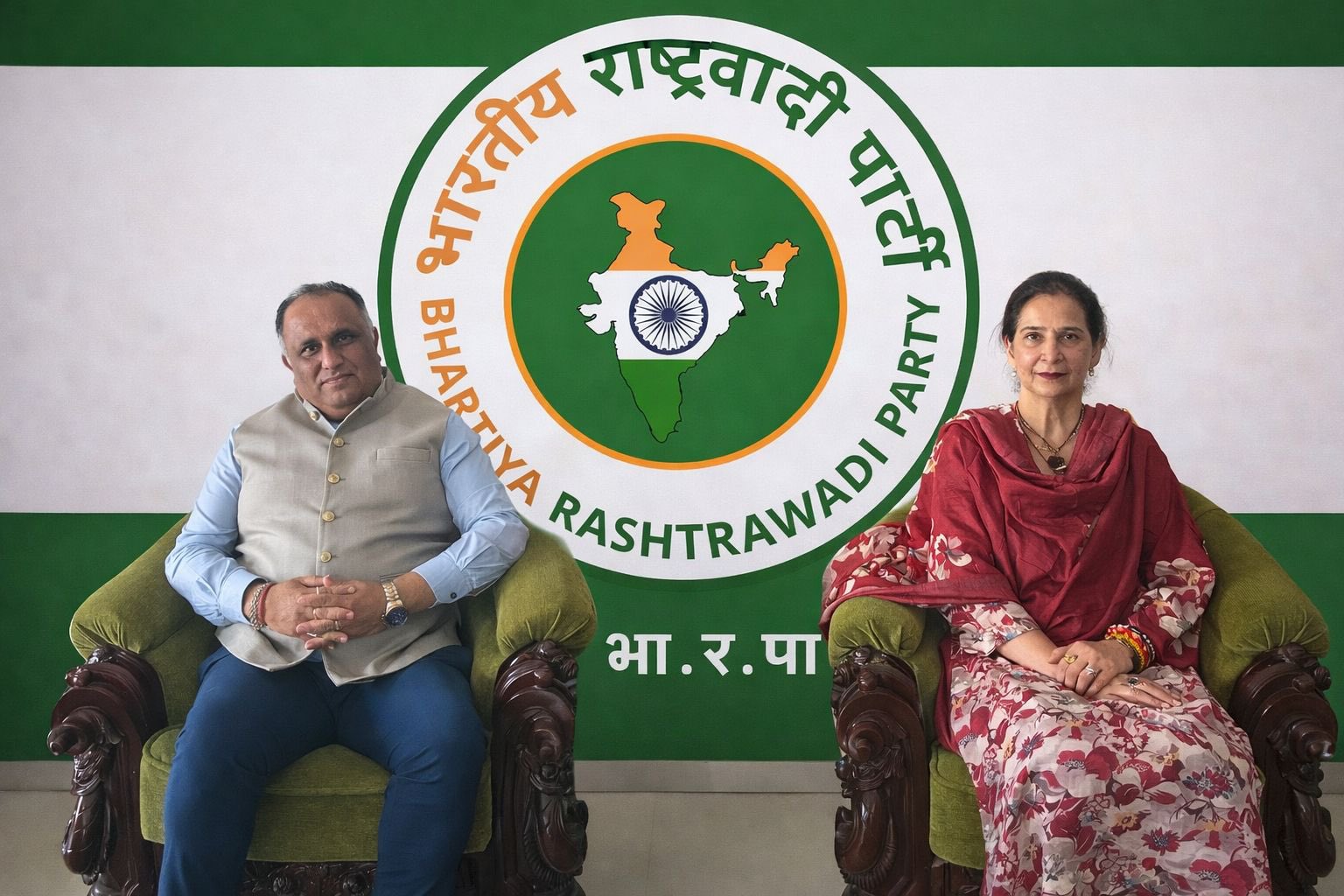
    Chandigarh: In a significant political move, Dr. Navjot Kaur Sidhu announced the formation of her new political party, the Bharatiya Rashtrawadi Party, on Monday. The announcement comes just two months after she was expelled from the Congress party for alleged anti-party activities.

    In a social media post, Dr. Sidhu explained the motive behind her new political venture, stating, “We have been working on a new alternative at a national level after carefully monitoring and reviewing the current performance of political leaders. Our goal is to dedicate our lives to our country and provide the people with what they truly deserve.”

    Dr. Sidhu expressed her vision for the party, emphasizing the importance of justice, peace, and spiritual growth. She further added, “A divine intervention brought together like-minded individuals with the ability, confidence, courage, and determination to work across each state. We aim to lead Punjab towards its long-lost glory as a Golden State, where love, justice, liberty, freedom, and selfless service define the people’s values.”

    The newly formed party also aims to work with a higher consciousness to bring about positive change, focusing on healing the people of Punjab with the teachings of spiritual masters. Dr. Sidhu concluded, “We will build a government of the people, for the people, and by the people of Punjab, where truth and love are the guiding principles.”

  • Ludhiana: Massive fire breaks out at Getson International Textile Factory

    Ludhiana: Massive fire breaks out at Getson International Textile Factory

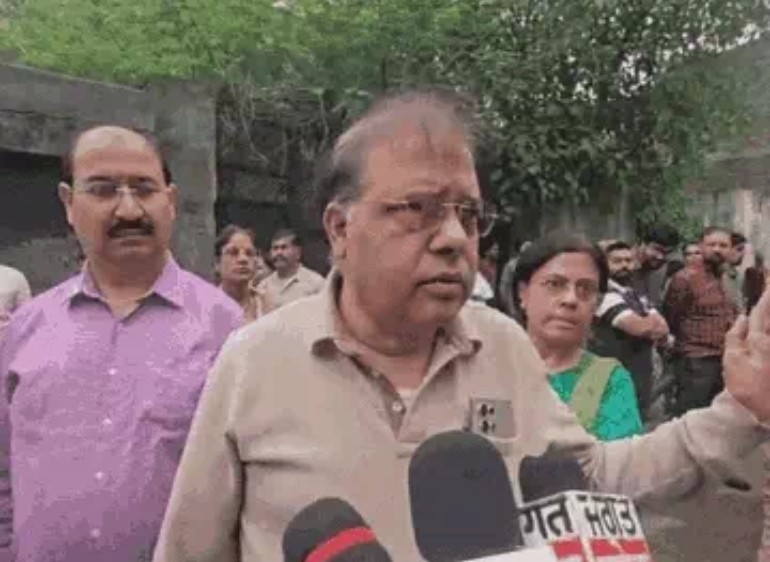
    Ludhiana: A major fire broke out at Getson International textile factory on Delhi Road in Ludhiana on Tuesday. Upon receiving the news, seven fire brigade vehicles were dispatched to the scene. Fortunately, all the workers present at the factory were safely evacuated, and the fire brigade team is working tirelessly to control the blaze.

    According to initial reports, the fire started suddenly inside the factory. The workers initially tried to extinguish the flames on their own, but as the fire spread rapidly, the fire brigade was called in. Police teams are also present at the site, ensuring safety and managing the situation.

    Factory owner, Vikas, shared that the fire may have been triggered by a cracker bursting on a transformer outside, leading to a short circuit inside the factory. This caused the textile rolls, cardboard, and machinery to burn to the ground. The factory had a significant amount of fabric rolls stored inside, which are feared to have been destroyed in the fire.

    The fire department continues to work on bringing the situation under control, while the authorities are investigating the cause of the fire.

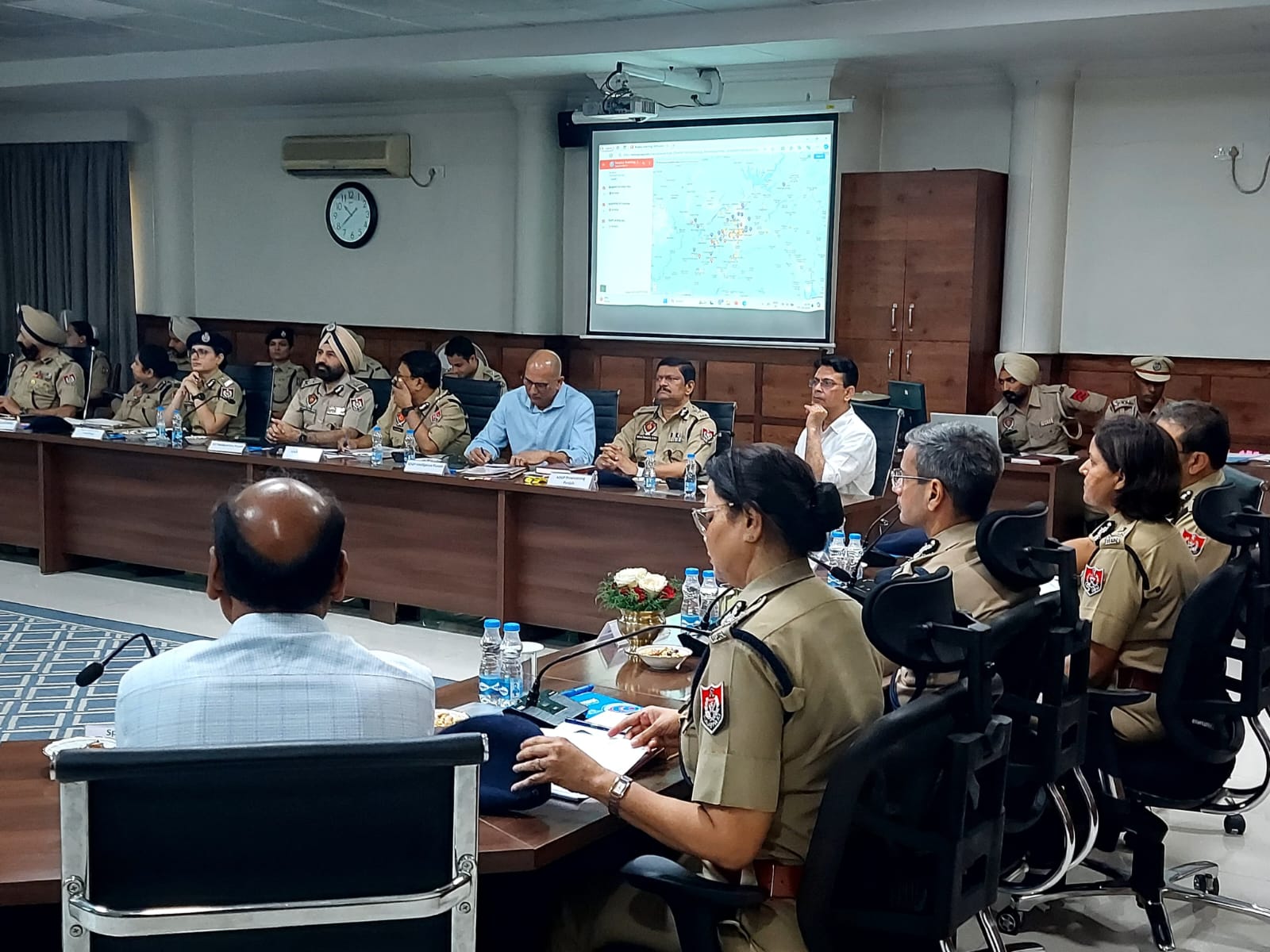
  • Punjab to appoint regular DGP after four years; Panel of 14 senior IPS officers sent to UPSC

    Punjab to appoint regular DGP after four years; Panel of 14 senior IPS officers sent to UPSC

    Chandigarh: Punjab is set to appoint a regular Director General of Police (DGP) for the first time in four years. The state government has prepared a panel of 14 senior IPS officers and is now in the process of sending their names to the Union Public Service Commission (UPSC). The panel includes a mix of officers from different batches, with some prominent names being discussed.

    Among the potential candidates are the current acting DGP, Gaurav Yadav (1992 batch), along with senior officers such as Sharad Satya Chauhan, Kuldeep Singh, and Harpreet Singh Sidhu. The government aims to complete this process soon, as a permanent appointment is crucial for strengthening the leadership of Punjab Police.

    The officers in the panel are divided into three groups based on their batch. The first group includes the 1992 batch officers, with names like Gaurav Yadav, Sharad Satya Chauhan, Kuldeep Singh, and Harpreet Singh Sidhu. The second group comprises the 1993 batch officers: Gurpreet Kaur Dev, Jitendra Kumar Jain, and Shashi Prabha Dwivedi. The third group is made up of 1994 batch officers: Sudhanshu Shekhar Srivastava, Praveen Kumar Sinha, Amardeep Singh Rai, V. Neerja, Anita Punj, Naresh Kumar, and Ram Singh.

    Interestingly, Samanth Goyal from the 1989 batch, who was initially considered for the post, has expressed his reluctance. Additionally, Arpit Shukla and Ishwar Singh are excluded from the race as they are nearing retirement.

    This development is significant as Punjab has been operating without a regular DGP for several years. The new appointment will likely bring stability and clarity to the state’s police administration, especially amid growing concerns regarding law and order. The process is expected to be concluded soon, with the final selection based on the UPSC’s evaluation.

  • Punjab government prepares for Municipal Elections amidst political tensions

    Punjab government prepares for Municipal Elections amidst political tensions

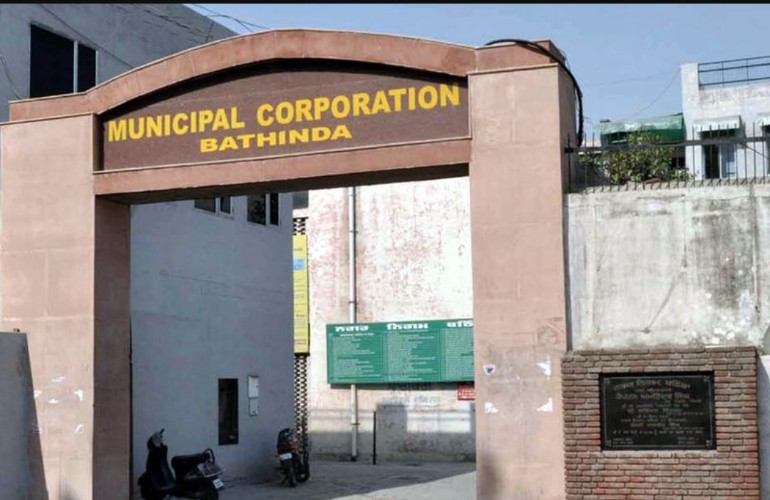
    Chandigarh: The Punjab government has initiated preparations for the upcoming municipal elections, with the process of appointing administrators for the municipalities whose terms are expiring. The election schedule is expected to be announced at the end of this month, and the polls are likely to take place in May.

    The terms of municipal corporations in Mohali, Hoshiarpur, Moga, Bathinda, Batala, Kapurthala, Abohar, and Pathankot are set to end this month, while the newly formed Barnala municipal corporation will hold its first-ever elections.

    According to government sources, the department is currently appointing administrators for the municipalities as per the regulations. Once the terms of all local bodies end, the state government will issue notifications, followed by the announcement of the election dates by the Punjab State Election Commission.

    These elections are being seen as a semi-final ahead of the upcoming Assembly elections, which are expected in a few months. The polls will be contested under party symbols, and all political parties will use this opportunity to showcase their strength in the state’s urban areas.

  • CM Mann calls for boycott of Akali leaders over misdeeds

    CM Mann calls for boycott of Akali leaders over misdeeds

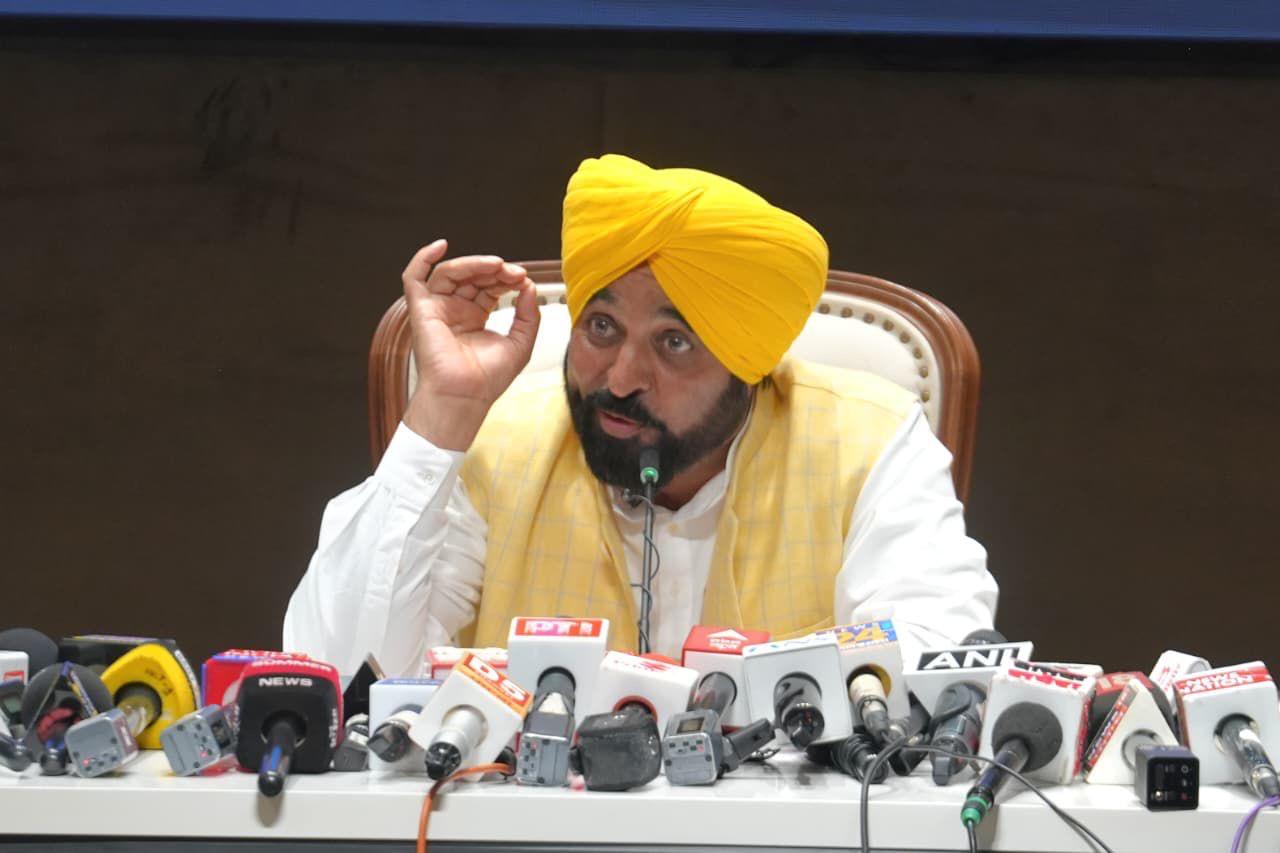
    Chandigarh: Punjab Chief Minister Bhagwant Mann, on Monday, urged the public to boycott leaders of the Shiromani Akali Dal (SAD). He emphasized the accountability of those responsible for the desecration of religious texts and for inflicting harm on the public. Mann referred to the incidents of 2015 involving the desecration of religious scriptures and the police firing on peaceful protesters in Faridkot.

    Addressing a gathering, the Chief Minister stated, “During their rule, these leaders (Akalis) wounded the sentiments of every common man by allowing the desecration of Guru Granth Sahib. These traitors should never be forgiven as they are responsible for the desecration of the sacred text and their hands are stained with the blood of innocent civilians.”

    Mann further asserted, “Supporting the Akali Dal means endorsing the era of Guru Granth Sahib’s desecration, the police firing on peaceful protesters, and endorsing the atrocities on the common public.”

    The Chief Minister continued, “Those who have destroyed the state’s citizens and are responsible for the desecration of Sri Guru Granth Sahib do not deserve any leniency. They must be taught a lesson, and a social boycott of these leaders is the need of the hour to prevent further harm to the state and its people.”

    Mann also accused the Akali Dal leadership of mixing politics with religion for personal gains. He highlighted that the leadership often undermines the authority of Sri Akal Takht Sahib by making arbitrary decisions about the appointments and dismissals of religious leaders, severely damaging their positions.

    Additionally, Mann accused Akali Dal leaders of committing theft of electricity during a rally in Muktsar. He questioned, “How can we expect any good from those involved in petty crimes like electricity theft?” The state government, according to Mann, will register a case against them.

    In response, Akali Dal leader Kanwarjeet Singh denied the allegations and dismissed Mann’s accusations.

  • Why Drug Traffickers Are Losing in Court: Inside Punjab’s Policing Model That is Delivering India’s Highest Conviction Rate for Drugs

    Why Drug Traffickers Are Losing in Court: Inside Punjab’s Policing Model That is Delivering India’s Highest Conviction Rate for Drugs

    Punjab E News (April, 6): Punjab’s Yudh Nashean Virudh (war against drugs) is increasingly being defined not merely by arrests, but by a sharp rise in convictions that are standing firm in courts, signalling a decisive shift in the state’s strategy against narcotics. Backed by the Bhagwant Mann Government’s flagship campaign Yudh Nashean Virudh under the leadership of CM Bhagwant Singh Mann, enforcement agencies are now focusing on building legally robust cases that ensure traffickers are not just caught, but punished.

    Police officials attribute Punjab’s remarkable conviction rate of 88% in cases under the Narcotic Drugs and Psychotropic Substances (NDPS) Act, the highest in the country, to a systematic transformation in policing. This includes prosecution-led investigations, scientific evidence collection, financial tracking of drug networks, and technology-driven intelligence gathering.

    According to official data, a total of 3870 convictions were secured out of 4812 NDPS cases decided by courts in 2022, reflecting a conviction rate of 80%. This rose to 81% in 2023 with 5635 convictions out of 6976 cases, and further to 85% in 2024 with 6219 convictions out of 7281 cases. In 2025, the conviction rate reached 88% with 6488 convictions out of 7373 cases. In 2026, 1634 convictions have already been secured out of 1831 NDPS cases decided so far, pushing the conviction rate to 89%, the highest in the country.

    These outcomes are being driven by Yudh Nashean Virudh, which has provided strong policy direction and institutional backing to enforcement agencies, ensuring that anti-drug efforts move beyond seizures and arrests to securing time-bound convictions.

    Senior police officials highlighted that the key to this success lies in a fundamental shift in policing philosophy. “The objective is not just to arrest traffickers but to make sure that they get jailed too. Our investigations are now designed to meet the highest legal standards so that cases stand strong during trial,” a senior Punjab Police officer said, adding, “Every step, from drug seizure to documentation and forensic examination, is carried out in strict compliance with NDPS procedures so that traffickers cannot escape merely on technical grounds.”

    Officials pointed out that the high conviction rate is the result of multiple systemic interventions, including structured and systematic training programmes, exposure of investigating officers to best practices in states like Himachal Pradesh, implementation of a detailed Standard Operating Procedure with a 60-point investigation checklist, and the appointment of Trial Special Officers to effectively manage cases in courts.

    A significant institutional collaboration has also been established with Rajeev Gandhi National University of Law, Patiala, where all Investigating Officers undergo a mandatory six-day certification training. Over 400 IOs have already been trained at the university, strengthening the quality of investigations.

    Given that the NDPS Act is one of India’s most stringent criminal laws with strict procedural safeguards governing search, seizure, and evidence handling, officials emphasised that even minor lapses can weaken cases. Punjab Police, therefore, have invested heavily in training investigators in scientific investigation methods and strict chain-of-custody protocols to ensure evidence remains legally sound.

    Another major factor behind the improved conviction rate has been the adoption of intelligence-led policing, supported by technology and citizen participation. Through digital platforms and anonymous tip-off systems, citizens are being encouraged to share information on drug trafficking activities, generating thousands of actionable leads and helping dismantle organised drug networks.

    Authorities have also intensified financial investigations targeting the economic foundations of drug trafficking. Legal provisions are increasingly being invoked to attach and freeze properties acquired through drug money, with assets worth hundreds of crores identified and frozen in recent years.

    “Drug trafficking is ultimately driven by money. By tracing financial trails and attaching illegal assets, we are dismantling the economic backbone of these networks. This also strengthens our cases in court because it establishes clear links between traffickers and organised drug trade,” the officer stated.

    While thousands of NDPS cases are registered every year and tens of thousands of traffickers are arrested, officials stressed that enforcement numbers alone do not define success. “The real deterrence is conviction certainty. When traffickers realise that arrest will almost certainly lead to conviction and loss of assets, it creates a strong message that drug crime will not go unpunished,” the officer said.

    Officials further noted that this broader ecosystem approach, combining enforcement, financial investigation, community intelligence, and rehabilitation, is helping disrupt both supply and demand sides of the narcotics problem. The alignment of investigators, prosecutors, and forensic systems into a coordinated framework has significantly improved the quality of cases presented in courts.

    “Our approach is simple: every case must be legally sound, evidence-based and capable of standing the test of trial. The conviction rate reflects the hard work of investigators, prosecutors and the support of citizens in this fight against drugs,” the officer added.

    With Punjab positioned along one of the major drug trafficking routes into India, officials believe this evolving strategy can serve as a model for other states tackling organised drug networks

    “The message is clear: drug traffickers will not only be arrested but will face certain conviction and the loss of their illegal assets. That is the strongest deterrence we can create,” the officer said.