









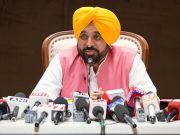

























Amritsar: Amid ongoing panthic and political churn, Punjab Chief Minister Bhagwant Mann is not the only leader to have been summoned by the Jathedar of Akal Takht Sahib for alleged violations of panthic norms.
Over the years, several prominent political figures have come under the Akal Takht’s scrutiny and were awarded tankhah—a form of religious punishment—after being found guilty of actions deemed contrary to Sikh principles.
Surjit Singh Barnala: the most debated case
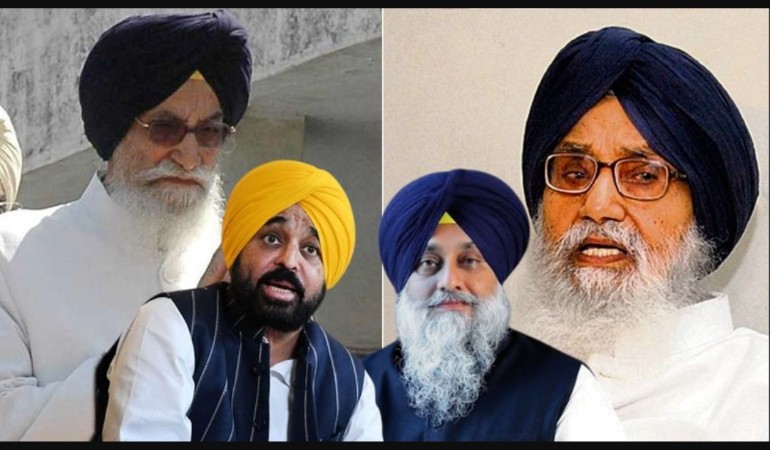
One of the most discussed cases in Sikh history involves former Punjab chief minister Surjit Singh Barnala. In 1986, following his decision to deploy security forces inside the Harmandir Sahib complex during Operation Black Thunder, Barnala was declared tankhahia and excommunicated from the Sikh Panth.
Two years later, he sought forgiveness. In the presence of thousands of devotees, Barnala was tied with ropes to a pillar near the Akal Takht and made to wear a placard reading, “I am guilty.” He was ordered to perform seva for a week, including cleaning utensils and floors.
Prakash Singh Badal and Giani Zail Singh
In 1979, then Punjab chief minister Parkash Singh Badal was summoned to the Akal Takht in connection with the 1978 Sikh–Nirankari clash.
Similarly, former President of India Giani Zail Singh was declared tankhahia for his role during Operation Blue Star in 1984. Both later sought forgiveness from the Akal Takht, which was subsequently granted.
Buta Singh: from excommunication to reinstatement
Former Union home minister Buta Singh was found guilty of violating Akal Takht directives related to the reconstruction of the Akal Takht building after Operation Blue Star. He was excommunicated from the Sikh Panth but was later reinstated after publicly apologising and performing the prescribed religious service.
Sukhbir Badal and Akali Dal leadership
In more recent history, Sukhbir Singh Badal, along with his council of ministers from the 2007–2017 Akali Dal government, was awarded tankhah by the Akal Takht. The punishment was linked to what were described as “serious mistakes” that allegedly harmed panthic interests. The leaders accepted the verdict and carried out seva as humble Sikhs to seek forgiveness.
These precedents underline that summoning political leaders—regardless of stature—has long been part of the Akal Takht’s role as the highest temporal authority of the Sikh community.