










































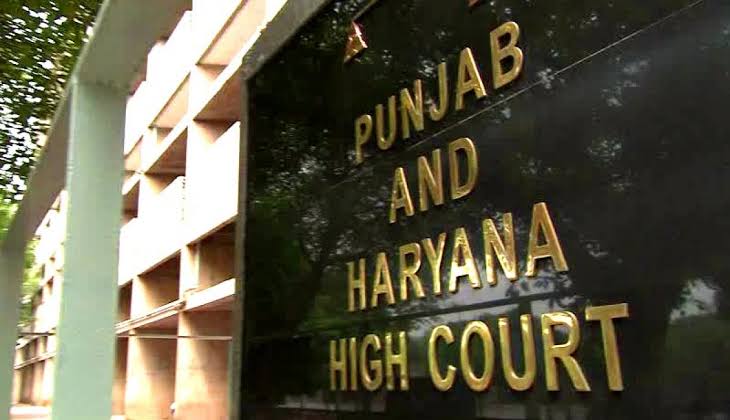
Chandigarh: The Punjab and Haryana High Court has observed that if the Punjab government was facing a financial crisis, it should have addressed it by curbing wasteful expenditure and scrapping unnecessary schemes instead of shifting the burden onto retired employees.
The bench made the remarks while ruling that a July 29, 2003 circular, which increased the pension commutation discount rate from 4.75 percent to 8 percent per annum, would not apply to the petitioners and similarly placed employees.
Allowing around 25 petitions filed by employees who retired from Punjab government services between July 31, 2003, and October 30, 2006, the court directed the state to recalculate their commutation benefits under the earlier, more beneficial table and refund the excess amount by March 31. The court noted that although the government restored the earlier 4.75 percent rate through another circular dated October 31, 2006, it had refused to grant the corresponding benefits to affected retirees.
The bench of Justice Anoop Chitkara and Justice Sukhvinder Kaur said pension commutation is a statutory welfare scheme and an essential component of post-retirement security. It observed that retired employees, who spent most of their lives serving the state and contributing to its development through taxes, are entitled to expect support from the government after retirement.
The judges expressed concern over the state’s failure to explore alternative measures to deal with the alleged financial crisis. “If there was a financial crisis in Punjab, the government could have reduced expenditure on unnecessary advertisements, billboards and wasteful schemes launched by the ruling party merely to secure votes. Instead, it targeted employees who had completed their service,” the bench said.
The court clarified that the ruling will apply only to the petitioners in the present cases and that reopening similar matters after nearly 19 years would not be appropriate.