







































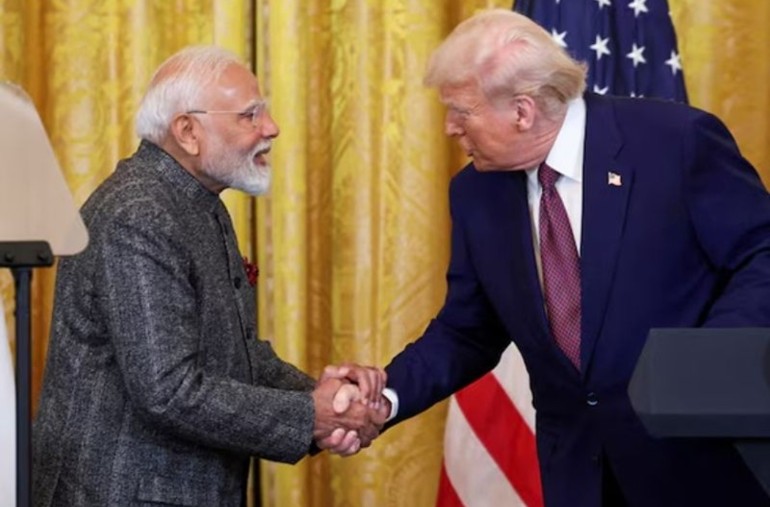
New Delhi: India and the United States on Saturday announced that they have agreed on a framework for an interim trade agreement under which tariffs imposed on Indian goods will be reduced to 18%.
In a joint statement, United States and India said they had reached an understanding on a “mutually beneficial” interim trade framework, reaffirming their commitment to negotiations on a broader US–India Bilateral Trade Agreement (BTA).
Under the proposed framework, India will eliminate or reduce tariffs on a wide range of American industrial goods and US food and agricultural products. These include dried distillers’ grains, red sorghum for animal feed, tree nuts, fresh and processed fruits, soybean oil, wine and spirits, among other items.
The statement noted that the framework builds on discussions initiated on February 13, 2025, by US President Donald J. Trump and Indian Prime Minister Narendra Modi, aimed at advancing a comprehensive bilateral trade agreement.
As part of the interim arrangement, the US will reduce import duties on Indian goods to 18%. This marks a significant rollback from the effective 50% tariff imposed in August last year, when Washington levied a 25% reciprocal tariff and an additional 25% levy on India over its purchase of Russian oil. The higher duties had hit Indian exporters hard.
The tariff reduction is expected to benefit key Indian export sectors such as textiles, leather, plastics, rubber, organic chemicals and handicrafts. Officials said that upon successful completion of the interim deal, duties on several products—including generic medicines, gems and diamonds, and aircraft components—could be brought down to zero, providing a boost to the ‘Make in India’ initiative.
India has also indicated plans to purchase around $500 billion worth of US energy products, aircraft, precious metals and technology products over the next five years.
The two countries further agreed to step up cooperation in technology trade, including graphics processing units (GPUs), and to strengthen supply chains through enhanced economic security coordination.