












































Chandigarh: Punjab, already struggling with door-to-door waste collection, segregation and clearing of legacy dump sites, is set to face tougher compliance requirements as stricter Municipal Solid Waste (MSW) rules come into force from April 1, 2026.
Despite the 2016 Municipal Solid Waste rules being in place for nearly a decade, the state’s urban landscape continues to reflect gaps in implementation. With the Centre notifying the Solid Waste Management (SWM) Rules, 2026, Punjab’s 166 urban local bodies (ULBs) are under pressure to clear old dump sites, avoid heavy penalties and strengthen administrative mechanisms.
Mandatory mapping, biomining of legacy waste
Under the revised rules notified by the Ministry of Environment, Forest and Climate Change, mapping and assessment of all legacy dump sites will be mandatory. Urban bodies must undertake time-bound biomining and bioremediation and submit quarterly progress reports through an online portal.
The rules emphasise strict segregation and scientific waste processing. Non-compliance will attract environmental compensation under the ‘polluter pays’ principle.
A senior government official said efforts are underway to meet the new standards, but admitted the task is difficult as earlier administrations made limited progress in scientifically clearing landfill sites.
‘100% collection’ claims under scrutiny
The 2016 rules required 100% door-to-door collection, segregation and establishment of sanitary landfills within five years. However, ground realities remain starkly different.
Though cities such as Sangrur, Malerkotla and Patiala claim full collection coverage in official plans, large garbage heaps and unsegregated waste remain visible across urban centres.
Advocate Kamal Anand said the Punjab Pollution Control Board (PPCB) has imposed environmental compensation of ₹171 crore on local bodies since 2021. He pointed out that the financial burden ultimately falls on taxpayers.
Key features of SWM Rules, 2026
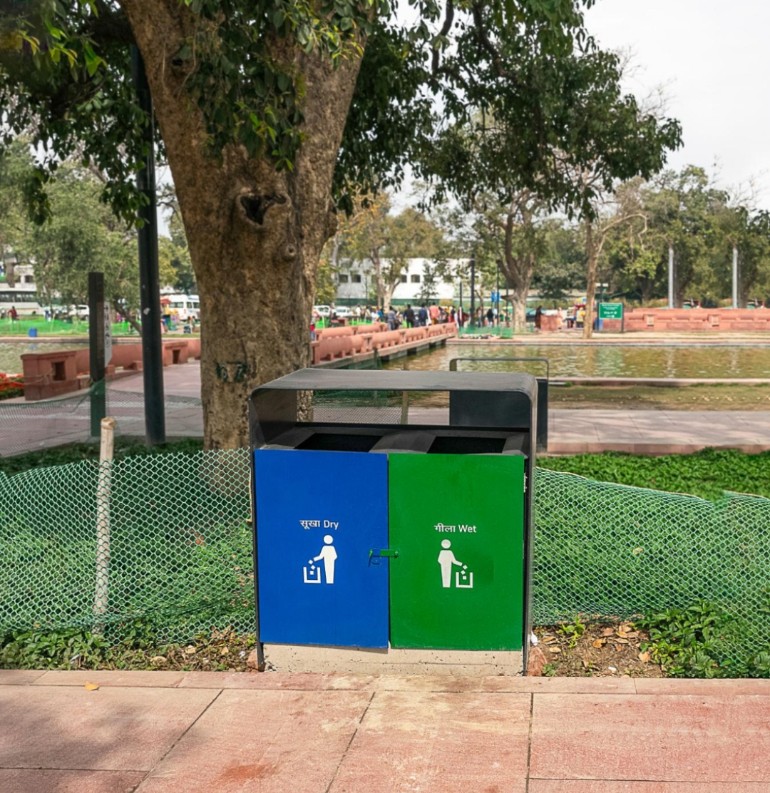
The revised framework introduces mandatory four-stream segregation at source:
Green bin for wet waste
Blue bin for dry waste
Red bin for sanitary waste
Black bin for hazardous waste
A digital tracking system through the Central Pollution Control Board (CPCB) portal will monitor waste management practices.
All legacy dump sites must be cleared through biomining by October 2026. Industries will also be required to use refuse-derived fuel and ensure scientific management of plastic waste.
Officials said the coming months will be crucial in determining whether Punjab can bridge the gap between policy and on-ground execution before stricter enforcement begins.