







































Seeks transfer of excise case from Justice Swarna Kanta Sharma to impartial bench
Presents evidence of bias against Justice Swarna Kanta Sharma
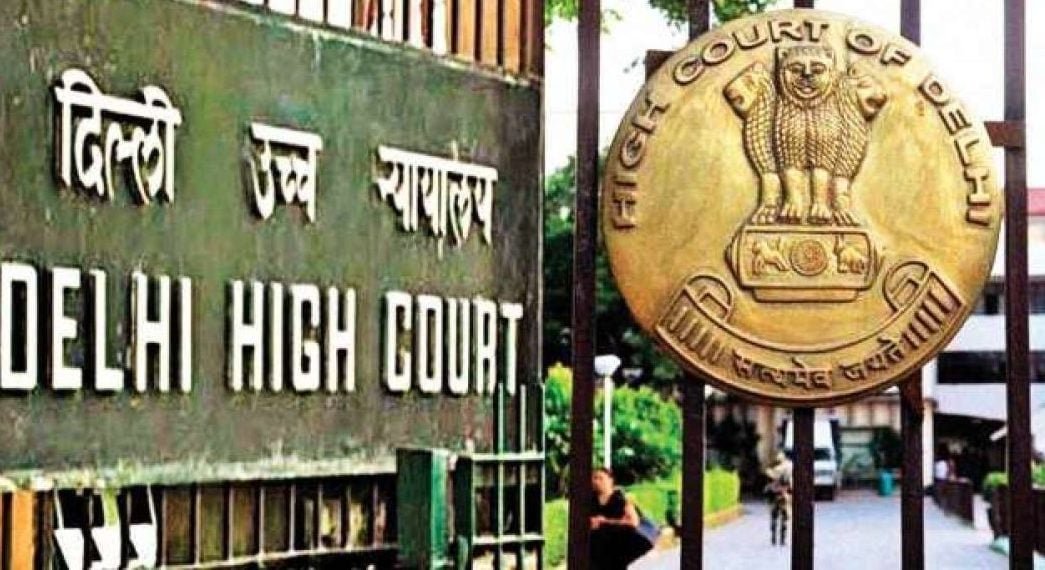
Punjab E News: Aam Aadmi Party (AAP) National Convenor Arvind Kejriwal, along with senior leader Manish Sisodia and several other accused in the Delhi excise policy case, has written to the Chief Justice of the Delhi High Court seeking transfer of the matter from the court of Justice Swarana Kanta Sharma to another bench. In the letter, they have argued that the case should be heard by an impartial bench to ensure fairness and protect public confidence in the administration of justice, while pointing out that several orders passed by the judge in the same excise-related matter have been overturned by the Supreme Court.
In his communication, Former Delhi CM Arvind Kejriwal stated the request was made due to a serious and genuine concern that the matter may not receive a completely impartial hearing. They requested the case titled “CBI v. Kuldeep Singh & Ors.” be placed before another bench to ensure fairness and maintain public confidence in the justice system.
The letter notes that Arvind Kejriwal was named as Accused No. 18 in the CBI FIR registered on 17 August 2022 and was arrested on 26 June 2024. The trial court heard arguments on charges for nearly two months across five charge sheets involving 23 accused persons before reserving its order on 12 February 2026. On 27 February 2026, the Special CBI Court passed a detailed order discharging all 23 accused.
Referring to the proceedings before the Delhi High Court, Arvind Kejriwal stated that the CBI filed a revision petition of about 50 pages challenging the discharge order. However, according to the letter, the petition did not point out any specific errors in the trial court’s findings or evidence that would justify setting aside the discharge order.
He further stated that during the first hearing on 9 March 2026, the High Court issued notice and recorded a prima facie view that the trial court’s detailed order was erroneous without hearing the discharged accused. The High Court also stayed the trial court’s observations and directions against the investigating officer, including directions related to possible departmental action, even though the CBI had sought only a limited stay.
Arvind Kejriwal also pointed out that the High Court directed the trial court dealing with the related Enforcement Directorate (ED) case to adjourn proceedings until the High Court considered the CBI revision petition. The letter states that the ED was not a party to the revision proceedings and that the CBI had not sought such relief.
The letter argues that issuing such directions at an early stage without hearing the discharged accused raises concerns about whether the revision petition would be examined with the required judicial neutrality. It also notes that despite the case involving multiple charge sheets and 23 accused persons, only one week was granted to file responses, which the letter describes as unusual haste in a matter of such scale.
Arvind Kejriwal further stated that the same bench had earlier decided several cases arising out of the excise policy matter, including bail pleas filed by Sanjay Singh, Arvind Kejriwal, Amandeep Singh Dhall, K. Kavitha and Manish Sisodia. According to the letter, in those matters the court made extensive prima facie observations accepting the prosecution’s allegations, including reliance on approver statements, alleged policy manipulation, alleged kickbacks and issues relating to the absence of a money trail.
The letter also points out that although some of these cases arose from Enforcement Directorate proceedings, those proceedings were based on the same CBI FIR and involved the same underlying allegations that are now central to the CBI’s revision petition against the discharge order.
It further notes that several of these judgments were later set aside by the Supreme Court, which granted relief to the accused persons. According to the letter, this strengthens the concern that the earlier approach taken in matters arising from the same controversy has already been found legally vulnerable.
Former Deputy CM Manish Sisodia clarified that the request for transfer is not based on any personal allegation against the judge but on the legal principle that courts must also consider whether circumstances could lead a fair minded litigant to reasonably perceive a possibility of bias.
The letter also referred to observations made by the Supreme Court in Arvind Kejriwal v. CBI, where the Court questioned the timing of his arrest. The Supreme Court observed that since the CBI had not found it necessary to arrest him for 22 months, the sudden urgency to arrest him when he was about to be released in the ED case appeared “quite suspect.”
The Supreme Court also emphasised that investigations must be fair and transparent, noting that the CBI “must not only be above board but must also be seen to be so,” and that public perception plays an important role in a democracy governed by the rule of law.
The applicants stated that the request for transfer is aimed at ensuring that the case is heard with neutrality and to protect public confidence in the administration of justice. They also noted that the Chief Justice, as the Master of the Roster, has the authority to allocate matters and assign them to appropriate benches.
In his prayer, Arvind Kejriwal requested the revision petition “CBI v. Kuldeep Singh & Ors.” be transferred from the court of Justice Swarana Kanta Sharma to another appropriate bench in the interest of justice and to maintain confidence in the fairness of the judicial process.