



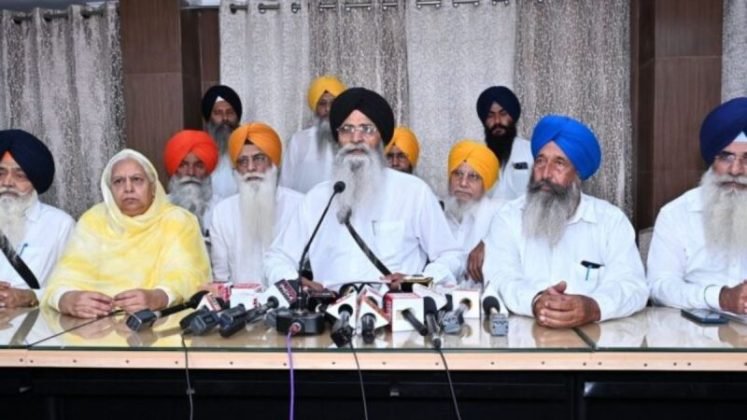
AMRITSAR: All eyes are on the Shiromani Gurdwara Parbandhak Committee’s (SGPC) annual presidential election, scheduled for November 20, ahead of the 2027 Punjab assembly polls. Often described as the “mini Parliament of the Sikhs”, the SGPC is a religious body, but the outcome of its presidential election could have a direct bearing on the Shiromani Akali Dal’s (SAD) traditional vote bank and Punjab politics.
Why is Harjinder Singh Dhami leading the race for a sixth term?
Advocate Harjinder Singh Dhami, who has served five consecutive terms as SGPC president, is regarded within the Akali Dal as a dependable organisational and legal strategist. His tenure has largely remained free of major controversies.
With the party leadership keen to avoid internal turmoil ahead of the assembly elections, Dhami is considered the strongest contender to secure a sixth consecutive term.
How has Bibi Jagir Kaur’s return changed the contest?
Bibi Jagir Kaur’s return to the Akali Dal has added fresh interest to the election. Political observers believe she appears more interested in returning to the SGPC presidency than navigating the difficult political equations of the Bholath assembly constituency.
However, she has made it clear that the final decision on her future role rests with Akali Dal president Sukhbir Singh Badal. She has also said she is prepared for both religious and political responsibilities.
Why does the election appear almost one-sided this time?
Jagir Kaur’s return to the Akali camp and the weakness of the opposition have made the contest appear almost one-sided, with the possibility of a consensus candidate.
Restrictions imposed by the Akal Takht on rebel leaders Mithu Singh Kahaneke and Jaswant Singh Puraian from participating in SGPC affairs have also weakened the opposing camp. The restrictions were linked to their alleged proximity to Punjab chief minister Bhagwant Mann.
Why is the ‘Punar Surjit’ faction planning a protest in Delhi?
The ‘Punar Surjit’ faction, led by former acting Jathedar Giani Harpreet Singh, along with former SGPC president Gobind Singh Longowal, has announced a protest march outside Parliament in New Delhi on November 20.
The group has two main demands: holding long-pending SGPC general elections, which have been due since 2011, and the release of Sikh prisoners, known as Bandi Singhs, who have completed their prison terms.
Why is control of the SGPC so important for the Akali Dal?
According to experts Dr Amarjit Singh and Professor Ashutosh Kumar, the SGPC functions as a parallel centre of influence through its control over gurdwaras, educational institutions and financial resources.
They believe that despite electoral defeats, the faction controlling the SGPC is often regarded as the “real” Akali Dal. The institution acts as a source of political oxygen for the party, helping it maintain its influence across Sikh networks.
What is the voting arithmetic in the SGPC House?
The SGPC general house has 191 members: 170 elected members, 15 nominated members and six ex-officio members. The latter include the Jathedars of the five Takhts and the head granthi of Sri Harmandir Sahib, who do not have voting rights.
With 39 members having died and another five to six having resigned or been disqualified, around 138 active members are currently expected to take part in electing the president.