



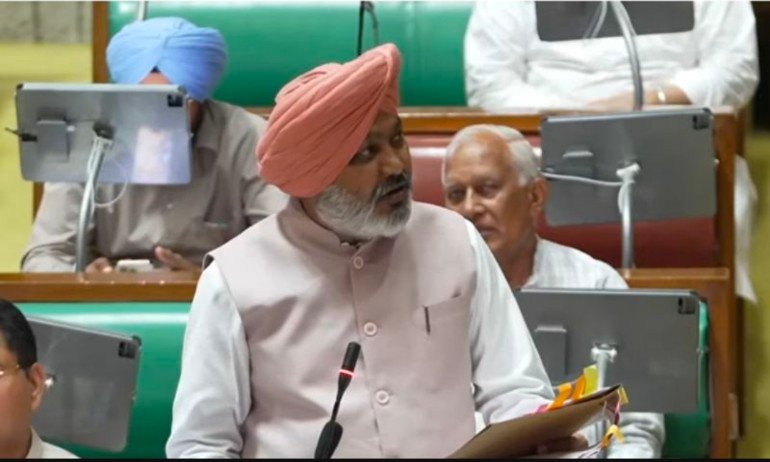
Chandigarh: The Punjab Assembly has passed the Punjab Outsourced Employees (Contractual Appointment) Bill, 2026, introduced in the House by Finance Minister Harpal Singh Cheema.
The legislation aims to bring eligible employees currently working through outsourcing agencies or contractors in government departments and institutions under direct government contracts. The move is intended to eliminate intermediaries and commission-based arrangements while providing employees with a direct contractual relationship with the government.
According to the government, around 26,000 to 28,000 outsourced employees could benefit from the legislation.
Five-year service requirement
Under the Bill, outsourced employees in general categories, including Group C and Group D, will be eligible for direct government contracts after completing at least five years of continuous service.
Employees working in hazardous categories will require three years of continuous service. These include high-voltage electricity department workers, sewer workers, sanitation workers, firefighters, fire drivers and fire station staff.
Conditions for continuous service
The Bill lays down specific conditions for determining continuous service. Employees must have:
Worked for at least 240 days in each year.
Completed at least seven hours of duty per day.
No break in service will be counted merely because the outsourcing agency has changed.
Breaks caused by administrative reasons, maternity leave, natural disasters or pandemics will not be treated as interruptions in service.
Salary and contract terms
After being brought under a direct government contract, an employee’s salary cannot be lower than their previous net in-hand salary and must comply with the minimum wage provisions under the Code on Wages, 2019.
Employees will also be required to mark their attendance through a biometric system after joining the direct contractual arrangement.
The contracts will be renewed on a year-to-year basis and can continue until the employee reaches the age of 58 years, subject to the provisions of the Bill.