



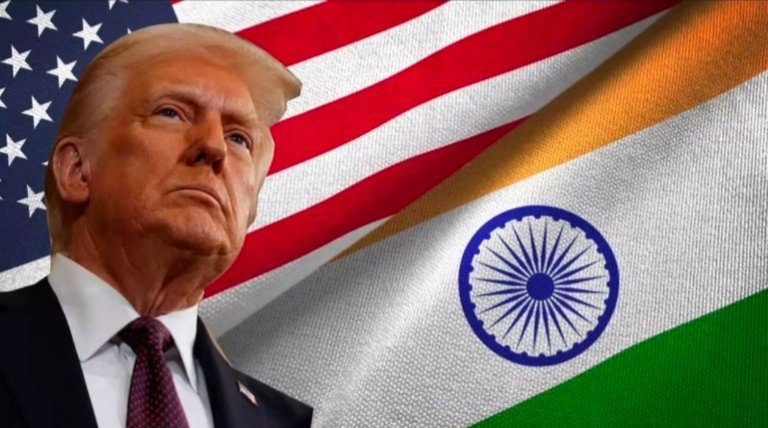
New Delhi: A bill passed by the US House of Representatives could give President Donald Trump powers to impose steep tariffs on countries, including India, that continue buying Russian oil and gas.
The Lindsey O. Graham Sanctioning Russia and Iran Act of 2026, which was passed by the US Senate last month, cleared the House on Wednesday by a 262-159 vote. The legislation will now move to Trump for consideration.
The proposed law would allow the US president to impose tariffs of up to 100% on imports from countries purchasing Russian energy, according to the Global Trade Research Initiative (GTRI). However, GTRI said the actual impact on Indian exports cannot be determined until Washington specifies the tariff rates, products covered and implementation timeline.
GTRI founder Ajay Srivastava said the legislation could turn sanctions into a trade-related instrument against countries such as India. He argued that Washington could use the threat of higher tariffs to push New Delhi to reduce purchases of Russian crude and make concessions in bilateral trade negotiations.
Srivastava also said India should not compromise its energy security in exchange for temporary tariff relief. According to him, discounted Russian crude has helped reduce India’s import bill, strengthen energy security and contain inflation.
Russia remains India’s largest crude supplier
GTRI said the issue is significant because India imports more than 88% of its crude oil requirements.
In July 2026, Russia supplied crude worth $7.27 billion to India, accounting for 51.1% of the country’s total crude imports of $14.21 billion for the month.
The UAE accounted for 10.8% of India’s July crude imports, followed by Saudi Arabia at 9.6%, Venezuela at 6.3%, Brazil at 5.5%, Oman at 5.3% and the US at 2.9%.
Srivastava said India’s crude sourcing pattern has changed considerably since 2022, when Gulf countries supplied more than 55% of India’s crude while Russia’s share was below 15%.
He also pointed out that China buys more Russian crude than India but argued that Washington could face greater difficulty applying similar pressure on Beijing because of the potential for Chinese retaliation.
Growing India-US trade
India’s exports to the US rose 21.83% year-on-year to $8.4 billion in August 2026, while imports increased 65.78% to $5.97 billion, according to the figures cited by GTRI.
During April-August 2026-27, India’s merchandise exports to the US increased 6.17% to $42.8 billion, while imports rose 29.6% to $28 billion.
The US was India’s largest trading partner in 2025-26 and remains an important market for labour-intensive and manufacturing sectors, including textiles, gems and jewellery, leather and footwear, handicrafts, smartphones, chemicals, electrical machinery and pharmaceuticals.
The precise impact of the proposed US legislation on these sectors will depend on the final tariff rates, the products covered and whether and how the provisions are implemented.