

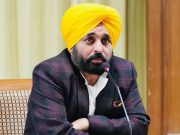









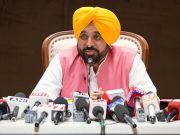
















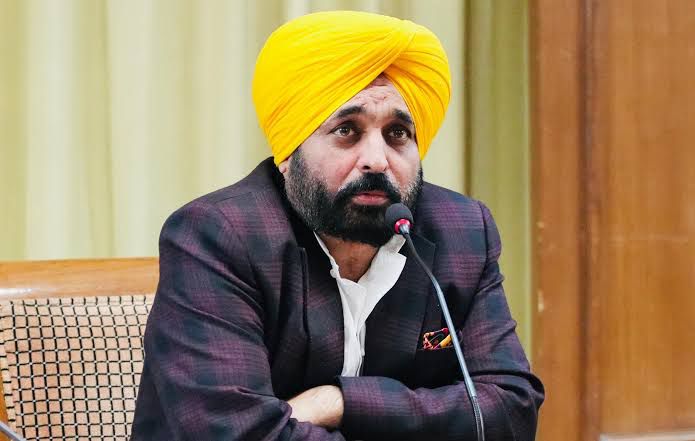
Chandigarh: Punjab Chief Minister Bhagwant Mann has announced that nearly 90 lakh women in the state will start receiving monthly financial assistance under the government’s flagship welfare scheme from next month.
Speaking during an interview, Mann said around 80 per cent of the groundwork for the scheme has already been completed, while the remaining formalities will be finalised during June. The assistance amount will be transferred directly into the bank accounts of eligible beneficiaries.
Under the scheme, named Mawan-Dhiyan Satkar Yojana, women belonging to the general category will receive ₹1,000 per month, while Scheduled Caste (SC) women will be entitled to ₹1,500 per month.
The Chief Minister clarified that women whose registration is not completed before the rollout will not lose their benefits. He said beneficiaries who complete registration later will also receive payments with effect from July. However, he did not give a clear response regarding opposition parties’ demand for payment of arrears for the past four-and-a-half years.
The monthly assistance for women was one of the key promises made by the Aam Aadmi Party (AAP) ahead of the 2022 Punjab Assembly elections. The scheme is now set to be implemented as the state moves closer to the 2027 Assembly polls.
During the interaction, Mann also rejected allegations that AAP had accepted money in exchange for Rajya Sabha nominations. Referring to former cricketer and ex-AAP Rajya Sabha MP Harbhajan Singh, who has since parted ways with the party, Mann said if anyone could prove that he had taken even one rupee for a Rajya Sabha seat, it would be like “a Sulphas tablet” for him.
Responding to criticism from opposition parties about governance, Mann said his government had proved its ability to run the state effectively. He claimed that after more than four years in office, the government was witnessing “pro-incumbency” among voters.
On the possibility of early Assembly elections, Mann said the government was prepared whenever the Election Commission decided to conduct polls, adding that the timing of elections remained the Commission’s prerogative.