












































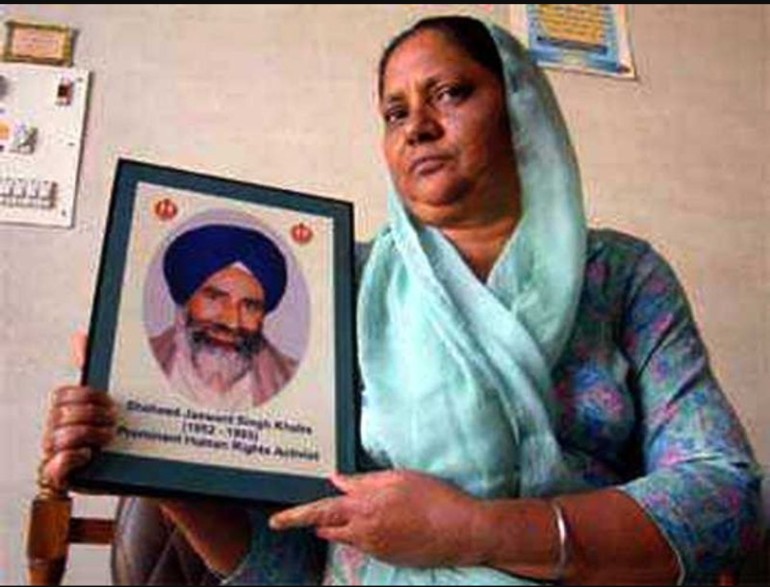
Chandigarh: Human rights activist Jaswant Singh Khalra’s campaign against alleged fake encounters and the cremation of unidentified bodies by the Punjab Police has so far led to the conviction of around 135 police personnel, most of them lower-ranking officials, according to lawyers associated with the cases.
Khalra’s life and his long legal battle have once again come into focus following the removal of the film Satluj (formerly Punjab 95) from the ZEE5 platform, reigniting debate over justice in the case.
Actor Diljit Dosanjh, who portrays Khalra in the film, reacted to the controversy on social media, saying, “It seems Khalra still cannot get justice even so many years after his death,” referring to the film’s removal.
Khalra began documenting alleged human rights violations in the early 1990s, claiming that nearly 25,000 innocent youths were killed in alleged fake encounters during Punjab’s militancy period in the late 1980s and early 1990s. Following the assassination of then Punjab Chief Minister Beant Singh, Khalra was abducted in September 1995 and was allegedly killed. His body has never been recovered.
According to court records and lawyers handling the cases, a CBI court in Patiala convicted six police personnel in 2005 for Khalra’s abduction and murder. Former DSP Jaspal Singh and ASI Amarjit Singh were sentenced to life imprisonment, while SHO/Sub-Inspectors Satnam Singh, Surinder Pal Singh, Jasbir Singh and Head Constable Pritpal Singh received seven-year jail terms for kidnapping and criminal conspiracy.
However, many of the fake encounter cases highlighted by Khalra remain pending.
Senior advocate Sarabjit Singh Verka, who has represented victims’ families in several such cases, said justice has been delayed for decades, adding to the suffering of affected families.
He noted that after Khalra’s disappearance, then SGPC president Gurcharan Singh Tohra approached the Supreme Court seeking a CBI investigation. A Bench headed by Justice Kuldip Singh directed the CBI to probe the matter.
The CBI subsequently identified 2,087 cases and registered 70 FIRs in 2001. However, the prosecution remained stalled for nearly 25 years due to the absence of mandatory government sanction.
Verka further alleged that during the Akali Dal-led government in Punjab, a legal cell was created within the police department to defend the accused officers and bear their legal expenses, while many victims’ families were forced to sell land and other assets to pursue justice in court.