




































Hormone Therapy Accounts For Nearly 60% Of Prostate Cancer Treatments Approved Under Bhagwant Mann Govt’s Mukh Mantri Sehat Yojna
Punjab E News (June 19): Hormone therapy accounts for nearly 60% of prostate cancer treatments approved under Bhagwant Mann Govt’s Mukh Mantri Sehat Yojna (MMSY), according to data from the State Health Agency (SHA), Punjab. The figures highlight both the rising burden of prostate cancer and the increasing dependence on publicly funded healthcare for advanced cancer care.
SHA data shows that 1,478 prostate cancer-related treatment packages were approved under the scheme, in the last 5 months, with total expenditure of ₹2.86 crore. Hormone therapy alone accounted for 918 procedures, representing around 60% of all approvals and more than half of total spending at ₹1.57 crore.
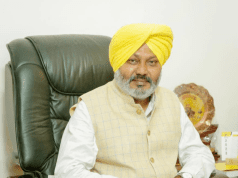
On this, Minister of Health and Family Welfare Dr Balbir Singh, said, “Hormone therapy remains the cornerstone of treatment for advanced prostate cancer because it reduces testosterone levels that drive tumour growth. It is typically used as a first-line option when the disease is no longer confined to the prostate gland.”
As per the SHA data, among hormone-based treatments, Leuprolide was the most widely used drug class, with 853 procedures approved across different dosages, costing over ₹1.43 crore. Chemotherapy was the second-largest category under the scheme, with 490 approved procedures costing ₹1.15 crore. Regimens included Docetaxel-based therapy as well as combinations such as Paclitaxel-Carboplatin, Cisplatin-Etoposide, and Mitoxantrone.
Some advanced chemotherapy packages were priced as high as ₹3.58 lakh per treatment. Radiation therapy was also recorded under the programme, with 70 fractions costing ₹13.36 lakh, reflecting its role as an additional treatment modality in selected cases.
Dr Supran Sharma, Assistant Professor, Department of Urology, Government Medical College, Patiala, said financial support has played a crucial role in ensuring timely access to cancer care. He noted that expensive therapies often delay treatment in the absence of insurance or state assistance.
Dr Supran Sharma also emphasised the importance of early detection. “Men above 50 are advised to monitor symptoms such as blood in urine, pelvic pain, increased urinary frequency, and unexplained weight loss,” he added.
He recommended PSA testing after the age of 50, and earlier screening around 40 for those with a family history of prostate cancer. “While genetics remain the primary risk factor, lifestyle influences may also contribute in some cases. Early diagnosis significantly improves survival outcomes and can reduce the need for intensive treatments like chemotherapy,” he stated.
Dr Supran Sharma added that as Punjab expands financial coverage for cancer care through MMSY, it is encouraging more and more men to get timely treatment without the fear of financial burden, thus reducing apprehensions, out-of-pocket expenditure and improving access to life-saving treatment across the state.