







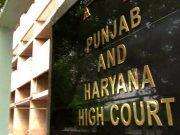


































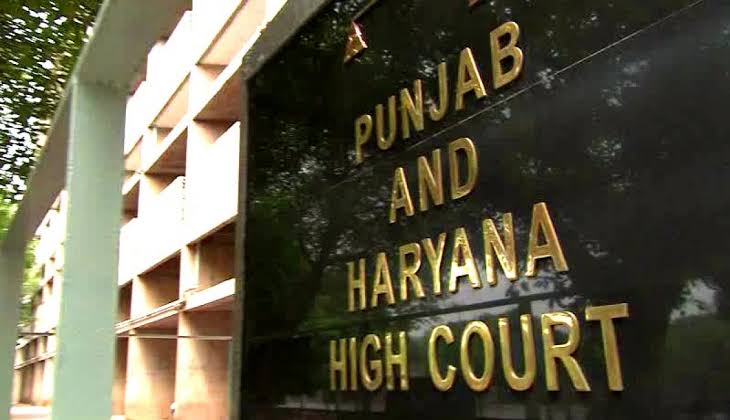
Chandigarh: The Punjab and Haryana High Court has ruled that merely participating in a violent protest, raising slogans against the government or expressing dissent does not, by itself, constitute the offence of sedition. The court observed that while violent demonstrations may amount to rioting or other criminal offences, they cannot automatically be treated as acts of sedition.
A division bench of Justice Vinod S. Bhardwaj and Justice Sukhvinder Kaur made the observations while dismissing an appeal filed by the Haryana government against the acquittal of four accused in a violence case linked to the 2017 conviction of Dera Sacha Sauda chief Gurmeet Ram Rahim Singh.
The High Court said that in a democratic system, raising slogans against the government or opposing its policies is a legitimate way of expressing dissent and cannot be equated with promoting hatred, contempt or rebellion against the State.
The bench observed that although a violent protest may amount to rioting, the occurrence of violence alone does not establish the offence of sedition. It held that anti-government slogans, by themselves, are insufficient to invoke sedition charges against citizens in a democratic setup.
The court further noted that frustration, dissatisfaction or public resentment cannot be treated as sedition. It emphasised that in cases involving serious charges carrying severe punishment, courts must carefully scrutinise the evidence and legal requirements before upholding such allegations.
According to the judgment, the prosecution must prove that the accused intended to incite violence, spread hatred against the government or endanger the security of the State. Mere allegations are not enough to sustain a charge of sedition.
The case relates to violence that erupted in August 2017 after Gurmeet Ram Rahim Singh was convicted. In Kaithal’s Kalayat, a mob allegedly vandalised and set fire to the office of the Uttar Haryana Bijli Vitran Nigam Limited (UHBVNL).
Four persons were booked under various charges, including sedition, arson and mischief. A trial court later acquitted all four due to lack of evidence. Challenging that acquittal, the Haryana government had approached the High Court, which has now upheld the trial court’s decision and dismissed the appeal.