












































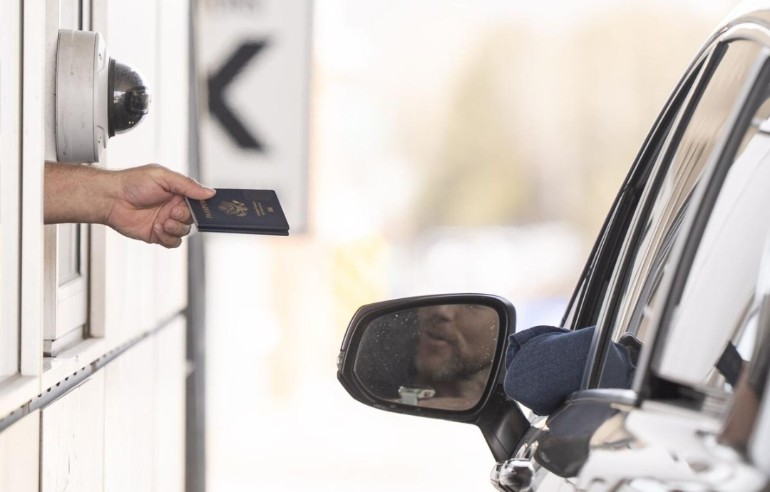
Washington: Border security agencies in the United States and Canada have reportedly intensified inspections amid growing concerns related to crime, harassment and other offences. During these checks, officials are allegedly examining drivers’ laptops and mobile phones for pornographic material, suspicious WhatsApp groups, illegal content involving minors, extremist links, international financial crime-related information and weapons-related material.
Punjabi truck driver Taranjit Singh Uppal, who works for a transport company in Nova Scotia, shared details about the situation through a video message. He said random mobile phone checks at border crossings have increased significantly and transport companies have also issued official email advisories warning drivers to keep their phones completely clean before crossing the border.
According to Uppal, US border officials are taking strict legal action if any obscene content, weapon photographs, gangster-culture chats or suspicious WhatsApp groups are found on devices.
He further urged the Punjabi community to remain cautious, stating that relatives in India or Punjab often share photographs of newborn or small children without clothes on WhatsApp. However, under US and Canadian laws, such material can fall under the category of child pornography.
Officials can reportedly arrest drivers immediately if such content is found on their phones. Data released by US border security agencies claims nearly 55,000 phones were subjected to forensic or digital inspection last year, while around 32,349 devices have already been checked this year.
Authorities can also retain a phone for several hours if they suspect any wrongdoing. Drivers cannot refuse to share passwords or PINs during inspection. Refusal to cooperate may lead to denial of entry into the United States and seizure of the device.
If serious or suspicious material is discovered, devices may be sent for forensic examination and drivers could face bans ranging from five years to a lifetime. Authorities are also scrutinising chats and emails for indications that a driver may be planning to work or settle illegally in the US in violation of visa conditions. In such cases, visas of work permit or PR holders may be cancelled immediately.
Drivers have additionally been advised to carry prescriptions for any medicines stored in their trucks, failing which they could face questioning or action under suspicion of drug trafficking.
Lawyers have reportedly clarified that foreign nationals do not have a legal right to call a lawyer during border inspections. They also warned that arguing with officials or providing false information could worsen the situation.
Officials are believed to use advanced licence plate readers and route-tracking systems for random inspections. Drivers are therefore being advised to permanently delete unnecessary, sensitive or objectionable chats, media files and other questionable material from their phones before reaching border checkpoints.